
Wood guide
Choosing Your Wood
Our name signs and wall art come in four real wood veneers and plain MDF. Here's how they compare, and how to pick the right one for your room.
Updated
In short: English oak is golden and goes with almost anything, Canadian maple is pale for light rooms, European cherry is a warm, rosy brown and American walnut is a rich chocolate brown that stands out on pale walls. Unpainted MDF is ready for you to paint.
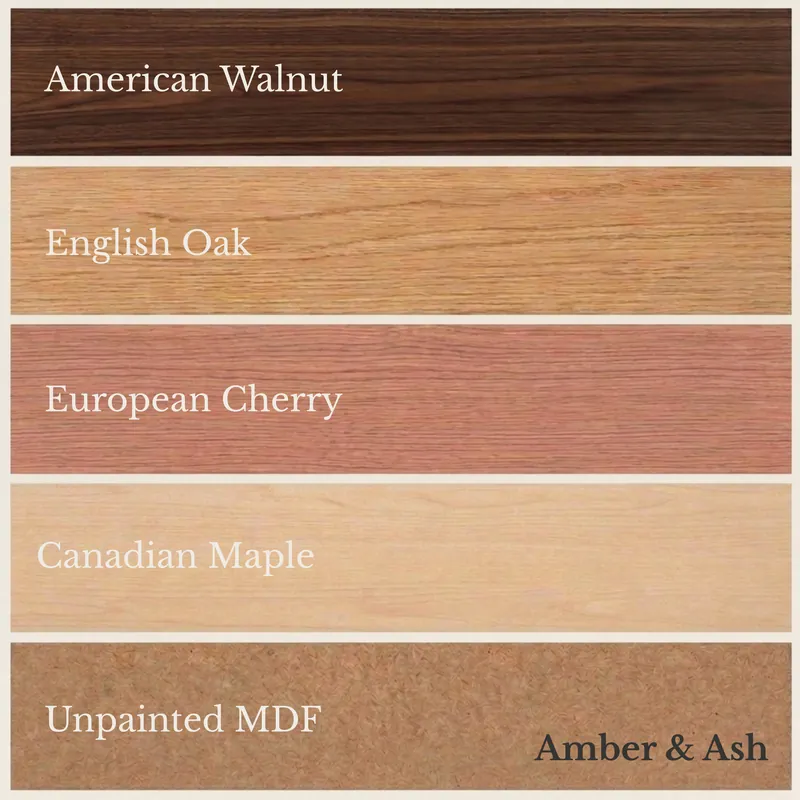
The woods compared
| Finish | Colour and grain | Looks best with |
|---|---|---|
| English Oak | Golden, with a clear grain | Almost anything: white, cream, sage and natural wood |
| Canadian Maple | Pale and creamy, with a soft grain | Light, Scandi-style rooms and pastel nurseries |
| European Cherry | A warm, rosy brown | Neutral and earthy rooms that need some warmth |
| American Walnut | A rich chocolate brown with darker grain | Pale walls, where it stands out most |
| Unpainted MDF | Smooth and even, ready to paint | Any colour scheme, painted to match |
What each finish looks like
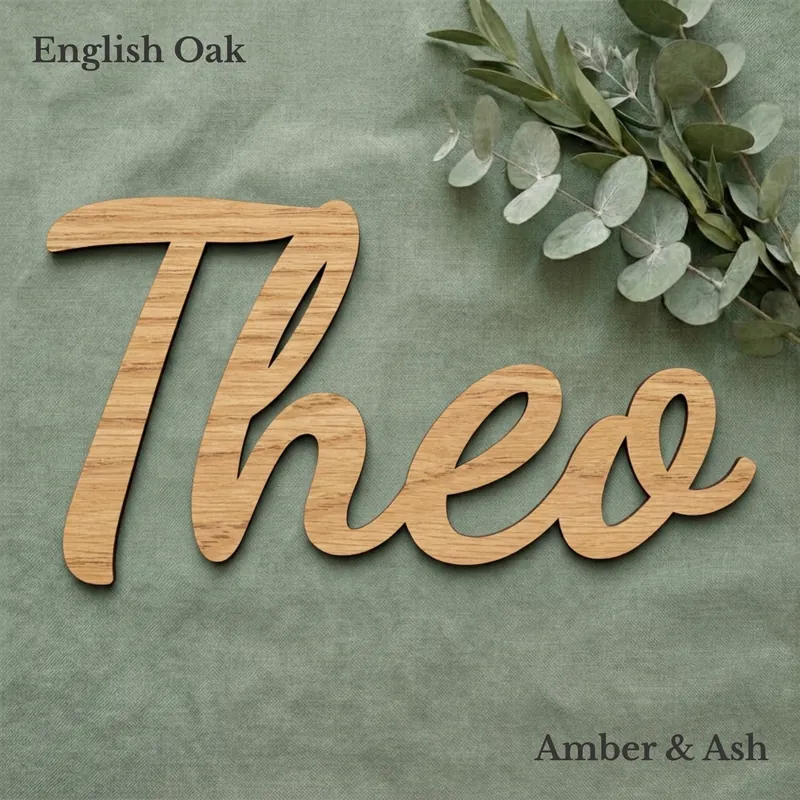
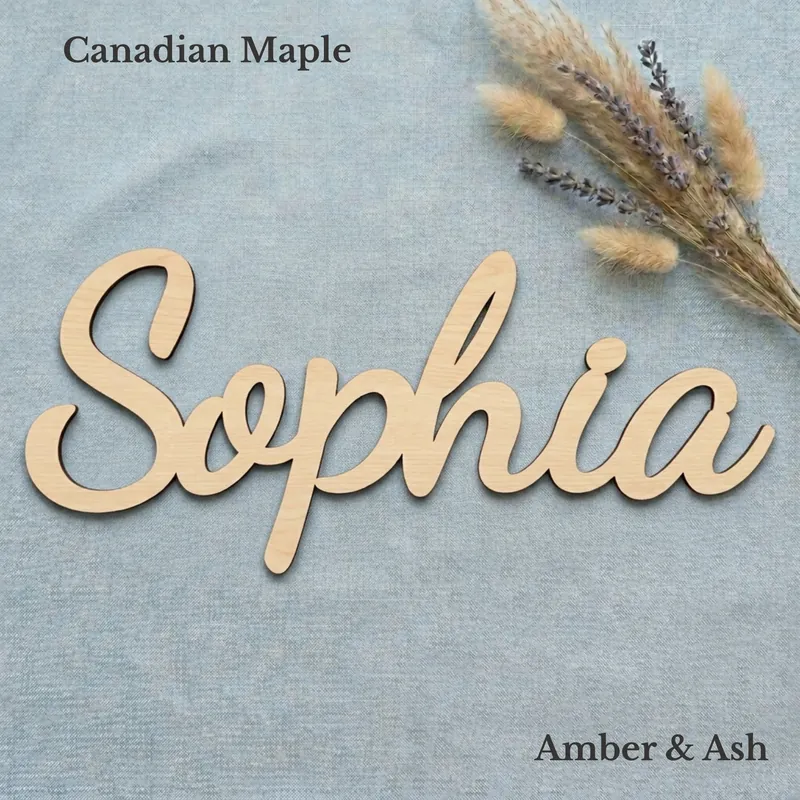
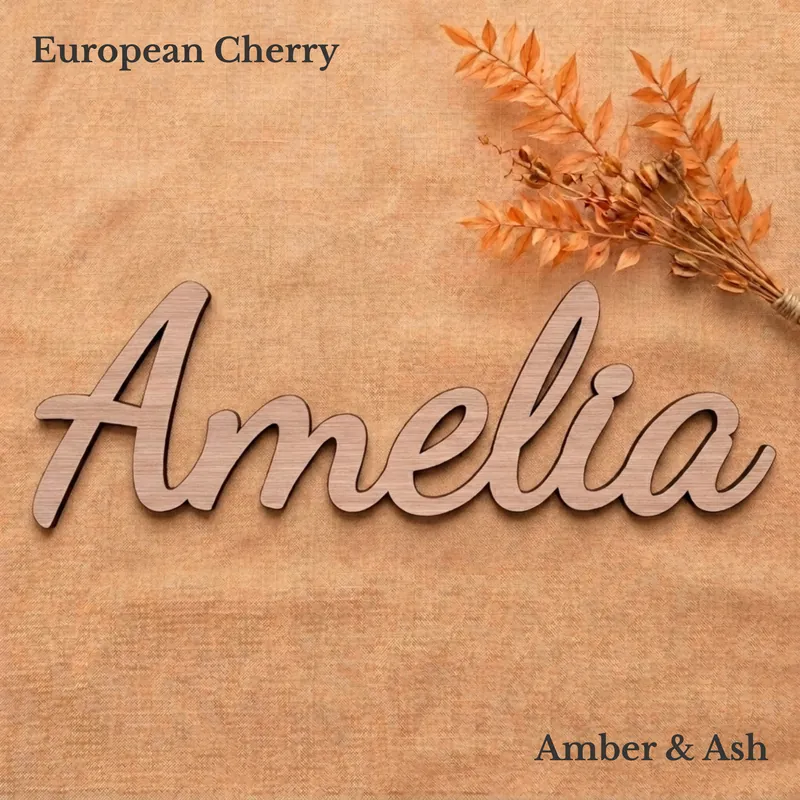

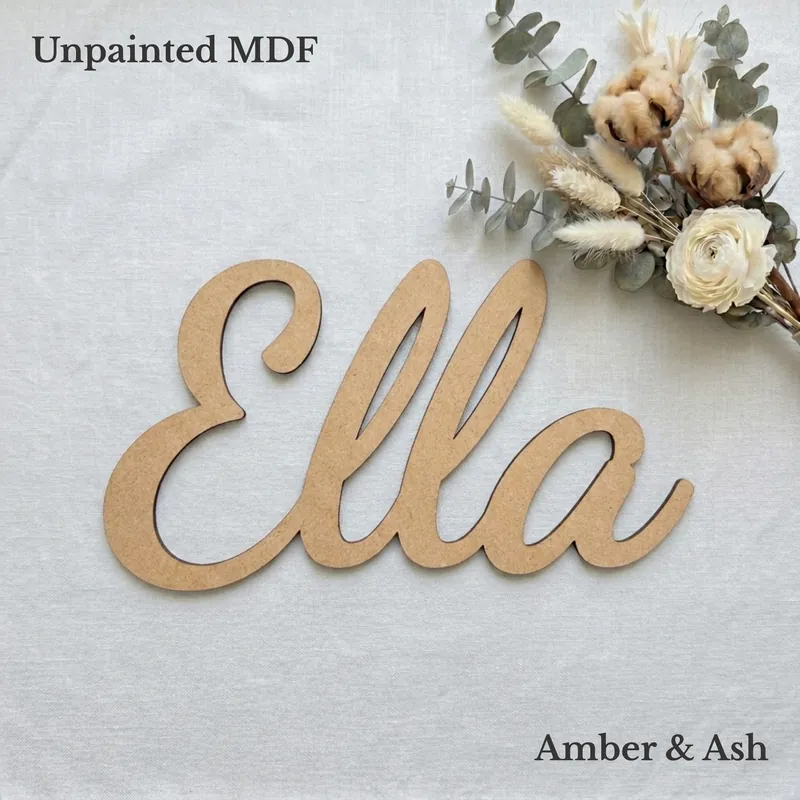
What is wood veneer?
Our oak, maple, cherry and walnut pieces are a thin layer of real wood on a smooth MDF core. You get the colour and grain of real wood in a piece that stays flat and is light enough to hang with the 3M tape we include.
No two are the same. Veneer is real wood, so the grain of every piece is a little different from the photos. That's part of the charm.
Which finishes each piece comes in
| Piece | Finishes | Thickness |
|---|---|---|
| Name signs | Oak, maple, cherry or walnut veneer, or unpainted MDF | 4 mm, or 3 mm in MDF |
| Single animals | Oak, maple, cherry or walnut veneer, or unpainted MDF | 6 mm |
| Animal sets | Oak, maple, cherry or walnut veneer, chosen for each animal | 6 mm |
| Christmas pieces | Oak, maple, cherry or walnut veneer | 4 mm |
Mixing woods
Natural woods sit happily together, so don't be afraid to mix them. Walnut and maple make a striking pair, while oak and cherry feel warm and calm. In a set of animals you choose the wood for each one, so you can keep them matching or mix pale and dark for contrast.
Painting MDF
Use a primer first, then acrylic or chalk paint, and let each coat dry fully. Paint before you hang the piece. For anything in a child's room, look for a primer and paint labelled as meeting EN 71-3, the toy safety standard.
Caring for your piece
Dust it with a soft, dry cloth. Keep it away from damp rooms and direct heat. Real wood changes a little with light over the years, and cherry deepens the most.
Still deciding?
Type a name into our Name Sign Designer to see it in every wood, or choose the one that matches the furniture already in the room.
Questions
What is wood veneer?
A thin layer of real wood. Our oak, maple, cherry and walnut pieces are real wood veneer on a smooth MDF core, so you get the colour and grain of real wood in a piece that stays flat and is light enough to hang with double-sided tape. Name signs and Christmas pieces are 4 mm thick, and animal wall art is 6 mm.
Which wood is best for a nursery?
It depends on the room. Canadian maple suits light, Scandi-style rooms and pastel nurseries, and English oak goes with almost anything. American walnut stands out most on pale walls, and European cherry adds warmth to neutral, earthy rooms. For a colour, choose unpainted MDF and paint it to match.
Does the wood change colour over time?
A little. Real wood changes with light over the years, and cherry deepens the most.
Can I paint an MDF sign?
Yes, that's what it's for. Use a primer first, then acrylic or chalk paint, and let each coat dry fully before you hang the piece. For a child's room, look for a primer and paint labelled as meeting EN 71-3, the toy safety standard.
How do I look after a wooden sign?
Dust it with a soft, dry cloth, and keep it away from damp rooms and direct heat.